




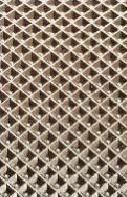
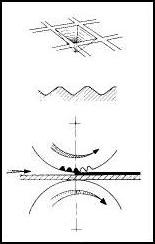
 SYNCHRO rollers rotate with a speed synchronized to the leather feeding one.
These are rollers used to be employed in the direct traditional finishing (SYNCHRO), when softer leathers could not be finished in REVERSE mode.
Nowadays the finest incisions are employed to obtain double tone effects (tipping on embossed surfaces); the bigger incisions for dyeing, light primers and fatliquors applications.
|
|
This table is purely indicative. The capacity (in g/ft2) varies depending on the working speed, on the product's viscosity and on the absorbance of the material deposited.
 Brochure